Rozhovor se zakladatelem aikidó


Celý text je také ke stažení v PDF k tisku a pohodlnějšímu čtení.
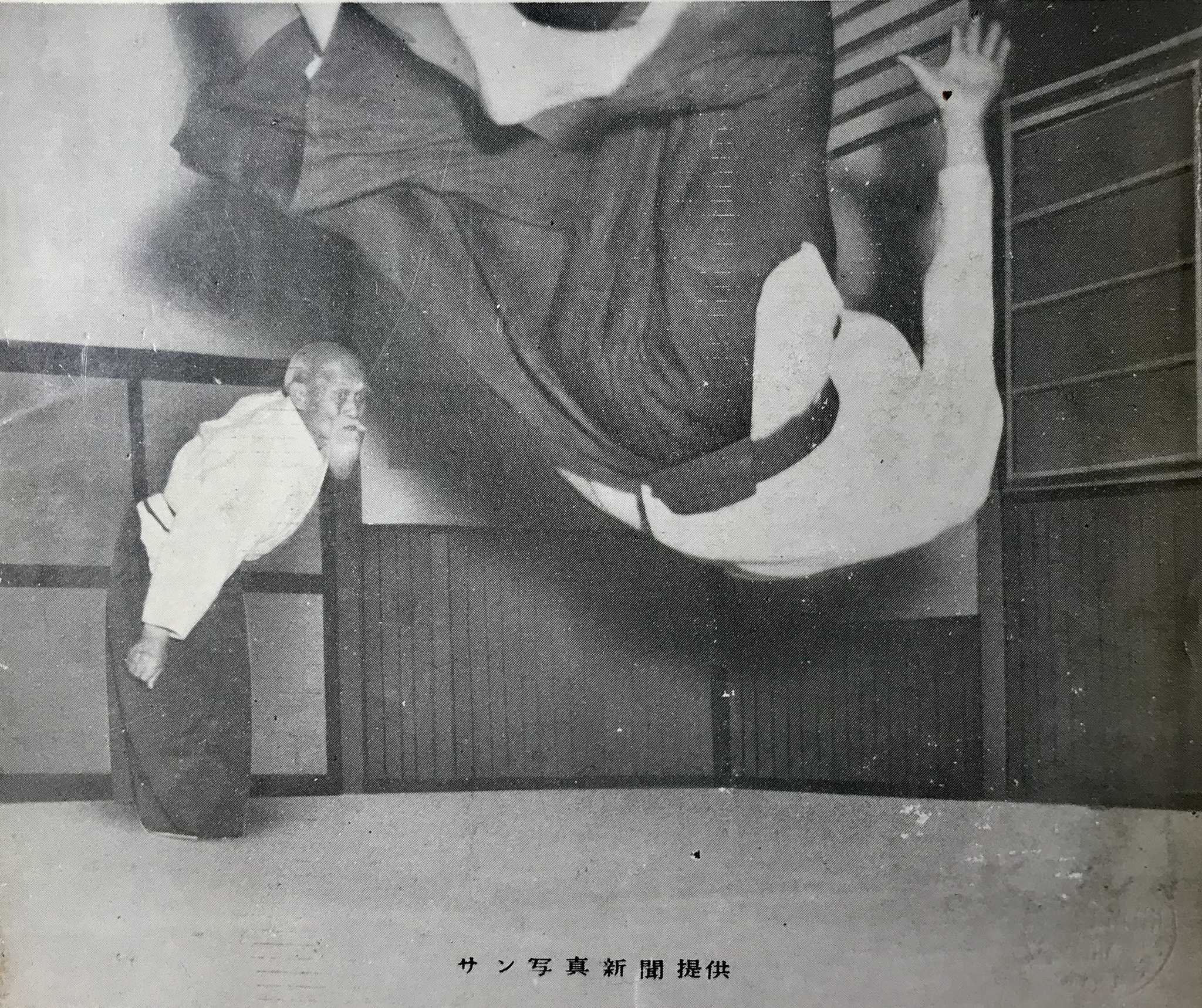
Pravé bu […] je cesta k absolutnímu sebezdokonalení, kterou se zbavíme protivníka jako takového.
— Morihei Uešiba
Přeložil Adam Nohejl v roce 2019 z japonského originálu v knize Aikidó sepsané Kiššómaru Uešibou (1964), tehdejším dódžóčó, pod supervizí Moriheie Uešiby, zakladatele a tehdejšího dóšu, poprvé vydané v roce 1957 nakladatelstvím Kówadó v Tokiu. Fotografie výše je převzatá z obálky knihy.
Hranaté závorky a poznámky pod čarou jsou poznámky překladatele. Text není nijak zkrácený nebo upravený s výjimkou rozdělení na osm částí a doplnění o fotografie. Tři tečky (…) používám tam, kde jsou v originále. Kurzíva značí japonské výrazy uvedené v české transkripci mimo vlastních jmen. Transkripci používám důsledně, zachovávám tedy dlouhé samohlásky (např. džúdó, Džigoró Kanó). Jména osob uvádím v u nás běžném pořadí jméno-příjmení (nikoli v původním japonském pořadí). V poznámkách o zakladateli aikidó, mluvím také jako o Ósenseiovi („Velkém učiteli“).
Jeden rozhovor s dóšu
1. Aikidó je budó lásky
Text tohoto rozhovoru je výběrem ze série, která vycházela deset dní v jedněch tokijských novinách. Text přetiskujeme s laskavým svolením vydavatele novin.
Osoby účastnící se rozhovoru:
-
dóšu Morihei Uešiba [níže Uešiba],
-
dódžóčó Kiššómaru Uešiba [níže K. Uešiba]
-
a dále dva redaktoři novin [níže A a B, jednou se objevuje i třetí, C].
A: Když jsem studoval, tak nám přednášející filosofie ukázal portrét jednoho dávného filosofa – a vy jako byste mu z oka vypadl!
Uešiba: Skutečně? Možná jsem se skutečně měl věnovat filosofii. Často totiž rozvíjím duševní stránku, dokonce více než tělesnou…
A: Co je pravdy na tom, že aikidó je jiné než karate nebo džúdó?
Uešiba: Aikidó je něco úplně jiného, než si běžní lidé představují pod pojmem budó [bojové umění].
B: A co je tedy aikidó?
Uešiba: Já bych řekl, že je to pravé budó. Je to totiž budó, které vzešlo z vesmírné pravdy. Tento vesmír sestává z dílů jediné věci, je celý v souladu jako jedna rodina a vyjadřuje tedy vrchol míru. Aikidó, které vychází z perspektivy takového vesmíru, pak nutně musí být výhradně budó ai [lásky]. Nemůže to být bu [boj, obecnější pojem než budó, bojové umění] násilí. Aikidó je tedy vtělením Stvořitele veškerenstva…jinými slovy je jako vznešený velikán. Proto, jsou pro aikidó místem šugjó [posvátné praxe] nebesa a země, a duševním stavem aikidó je pokojné, klidné odmítnutí násilí; dá se říct, že je to nejvyšší umění, které si klade za cíl zušlechtit dokonce i násilí. A to je podle mě pravý duch japonského budó. Protože tato země nám byla dána a naším údělem je budovat pozemský ráj, tak nějaké válčení je naprosto nesmyslné.
A: Je to tedy úplně něco jiného než budó v minulosti, že?
Uešiba: Ano, naprosto něco jiného. Když se ohlédneme za budó do minulosti, uvidíme, že bylo používáno k nanejvýš politováníhodným věcem. Obzvlášť v období válčících knížectví se používalo jako nástroj bojů vedených prospěchářstvím a chamtivostí knížat daimjó, to bylo šílené. I já jsem po válce velice litoval toho, že jsem učil vojáky bu pro zraňování a zabíjení lidí. To bylo před sedmi lety, kdy jsem ovládl pravou cestu aiki, a řekl jsem si „Tak dobře, vybudujme pomocí tohoto aiki pozemský ráj!“ To proto, že zatímco nebesa i země postoupily do stavu dokonalosti, lidstvo, a Japonci zvlášť, se zmateně potácí. Pomyslel jsem si: „To musíme napravit nejdříve. O tohle usilovat, to je cesta pro celé lidstvo,“ a pochopil jsem, že pravé bu aikidó je ai [láska], harmonie. Bu aikidó je tedy výrazem ai, a protože jsem studoval ve službě vlasti, jeho duchem musí být rozhodně ai a wa [harmonie; zároveň označení japonské kultury].
Nicméně, protože aikidó, to jsou principy přírody, nebes a země, jinými slovy, je to pravé budó zrozené ze všech přírodních jevů vesmíru, můžeme říct, že je to budó, které za všech okolností vítězí.
2. V aikidó není partner
B: Co je tedy teoreticky vzato aikidó…vy běžně jen tak házíte s velkými chlapy, zvedáte mnohasetkilové věci, jako by to bylo nic – to je něco mystického…takhle nějak si člověk představuje třeba nindžucu.
Uešiba: Ne, to asi jen vypadá mysticky. Aiki využívá sílu partnera v plném rozsahu. Čím silnější je tedy partner, tím snazší to mám já.
B: Tak v tom případě se používá aiki i v džúdó. Říká se: když partner táhne, zatlač, když tlačí, zatáhni…, takhle se partner vyvede z rovnováhy a použije se technika.
Uešiba: V aikidó se v žádném případě neútočí. Jestliže někdo útočí, tak to znamená, že jeho duch už prohrál. Podle principu naprostého neodporování nikdy nejdeme proti partnerovi. Proto v aikidó není partner. Masakacu, agacu [pojmy jsou rozebírány dále v rozhovoru], podle nebeském údělu vítězí nade vším – proto má aikidó absolutní sílu.
A: Tak to je tedy go no sen [časování, ve kterém se čeká na akci protivníka].
Uešiba: Nesmysl. To nemá co dělat ani se sen sen no sen ani s go no sen. Dejme tomu, že partner je silný: tak se zbavím pocitu, že ho chci přemoct, a dokonale ho přemohu…je to tedy takový stav, že vítězím v každém okamžiku. Jestli zvítězíme nad partnerem, nebo jestli nás partner porazí – nic takového není. Proto v aikidó nikdy žádný partner není, a i kdyby byl, je to naše součást, pohybujeme s ním, jak je libo.1
B: A kolik máte technik?
Uešiba: Základních jsou asi tři tisíce, ale protože každá z nich se dá ještě rozdělit na šestnáct, tak jich celkem bude snad desítky tisíc. Ze zdroje, který máme, můžeme totiž podle okolností vytvořit cokoli.
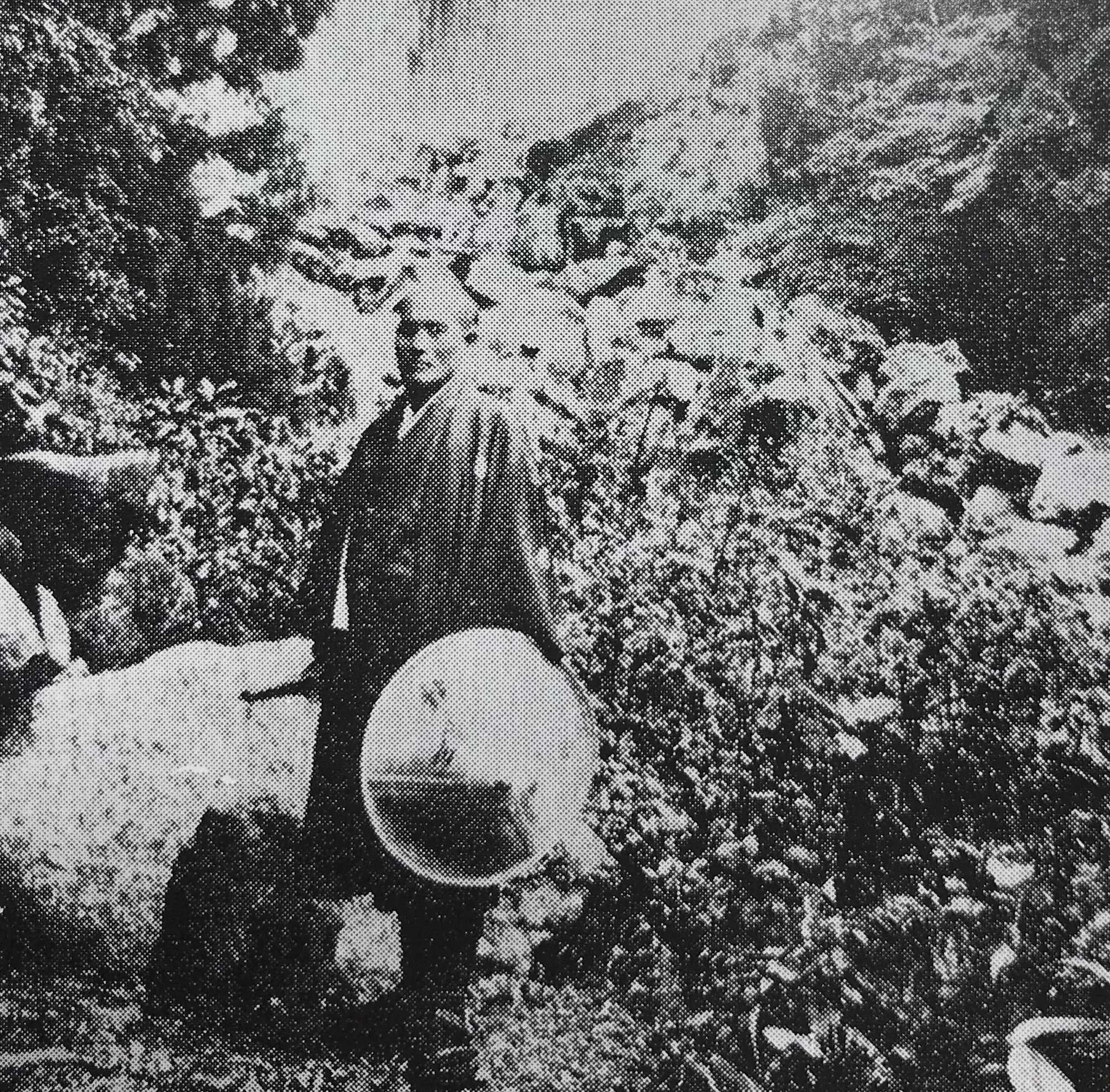
Ósensei během putování po Japonsku, o kterém mluví dále rozhovoru. Fotografie je převzata z knihy Aikidó gihó (Uešiba, 1962).
3. Šel jsem hledat pravé budó
A: Od kolika let se věnujete šugjó [studiu, asketické praxi] budó?
Uešiba: Od čtrnácti nebo patnácti [podle západního počítání tedy zhruba od dvanácti nebo třinácti]. Nejdříve jsem se učil tendžin šin’jó rjú džúdžucu od Tokusaburóa Tozawy, pak kitó rjú, jagjú rjú, sósei rjú, šinkage rjú a další formy džúdžucu2, ale stále jsem si říkal, že pravé budó by mohlo být ještě někde jinde, takže jsem zkoušel i hózóin rjú sódžucu [umění boje s kopím] nebo kendó, ale nic z toho mě neuspokojilo, protože všechny tyto školy bez rozdílu jsou založené na vítězství či prohře v souboji. Od tohoto bodu moje šugjó [asketická praxe] spočívalo v tom, že jsem cestoval po Japonsku a dál hledal cestu. Ale k ničemu to nevedlo.
A: Takže jste šel do světa na zkušenou, jako kdysi chodívali mladí samurajové?
Uešiba: Šel jsem hledat pravé budó. Dělal jsem to tak, že i když jsem šel do jiného dódžó, tak jsem nevyzýval tamějšího učitele. Víte, když někdo vede dódžó, má příliš jiných starostí. Takový člověk nemůže pořádně ukázat, co v něm skutečně je. Takže jsem se choval nanejvýš zdvořile a učil se od nich, a když jsem náhodou zvítězil, zdvořile jsem poděkoval a vrátil jsem se domů.
B: To znamená, že zpočátku jste se neučil aikidó?
Uešiba: Neříkal jsem tomu aikidó. Učil jsem se všechna budó.
B: A s aikidó jste začal kdy asi tak…?
Uešiba: Jak jsem právě řekl, hledal jsem pravé budó, putoval jsem po všech koutech, ale kolem třiceti [v roce 1912, dle našeho počítání ve věku 28 let] jsem se přesunul na Hokkaidó, a když jsem přišel do Engaru v Kitami, přespával jsem v rjokanu Hisada. Tehdy jsem se seznámil se Sókakuem Takedou, učitelem daitó rjú z Aizu [Takedova rodného kraje v prefektuře Fukušima], bylo to asi třicet dní, a když jsem se od něj učil, moc tomu nerozumím, ale bylo to jako nějaký spirituální zážitek. Pak jsme ho pozvali a spolu s patnácti, šestnácti zaměstnanci a žáky jsme k němu vstoupili do učení a pátrali po esenci budó, jako by na tom záviselo vše.
B: Takže když jste se učil daitó rjú od Sókakua Takedy, přišlo vaše probuzení a objev aikidó?
Uešiba: Ne, řekněme spíš, že díky Takedovi se mi otevřely oči pro budó.
B: Znamená to tedy, že k objevu aikidó byl třeba ještě nějaký zvláštní impuls?
Uešiba: Ano, tak. V roce 1918 na tom byl otec velmi špatně, takže jsem se musel s Takedou rozloučit a vrátit se za rodiči. Slyšel jsem tehdy, že když půjdu do Ajabe v Kjótu, kde působí Ómoto kjó, a provedu modlitbu, tak se uzdraví… Tak jsem se sešel s Onisaburóem Degučim [zakladatelem a vůdcem Ómoto kjó, jednoho z japonských tzv. nových náboženství]. No, a když se za něj pomodlil a já se vrátil k rodičům, tak otec už byl po smrti. I když jsme se s Degučim viděli jen jednou, bylo to osudové setkání a nakonec jsem se s celou rodinou přestěhoval do Ajabe. A tam jsem byl do sklonku období Taišó [trvalo 1912–1926].
Takže to mi nejspíš bylo nějakých čtyřicet.3 Jednoho dne, když jsem si u studny utíral pot, tak najednou z nebe začal padat nespočet oslnivých zlatých paprsků, a jakmile mě úplně obalily, tak se moje tělo najednou zvětšilo, zvětšilo se tak, že zaplňovalo celý vesmír. A jak jsem byl z toho všeho ohromený, tak jsem náhle dosáhl probuzení. Uvědomil jsem si: „Nemá smysl myslet si, že zvítězím. Budó musí být kamae [postoj, střeh] lásky. Musím žít v lásce.“ Toto je aikidó, to je staré seigan no kamae [střeh, při kterém špička meče míří na oči protivníka].4 Když mi to došlo, cítil jsem nevím proč vděk a začaly mi téct slzy – nemohl jsem si pomoct.
B: To se vlastně říká, že být jen silný, je v budó k ničemu. Odedávna se také říká ken zen ičči [„jednota meče a zenu“, slova zenového mistra Takuana, 17. stol.]. Je třeba prozřít, že esence budó je prázdnota, tam už neexistuje „správné“, ani „špatné“.
Uešiba: Jak jsem říkal dříve, je to cesta masakacu a cesta agacu [pojmy rozebíráné dále v rozhovoru].
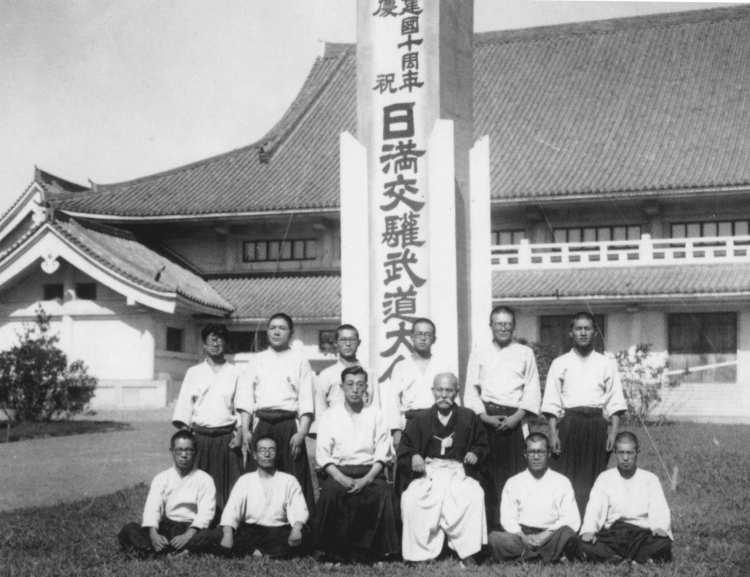
Fotografie z roku 1942, na které by měl být Morihei Uešiba ve skupině lidí před Šinbudenem. Nad nimi je nápis „Oslavy deseti let od založení státu. Přehlídka budó v rámci japonsko-mandžuské družby.“ Fotografie se vyskytuje na různých webových stránkách, původní zdroj se mi nepodařilo dohledat.
4. Mandžuská epizoda
B: Říká se, že jste se jednou stál ve velkých nepokojích proti asi sto padesáti dělníkům.
Uešiba: Aha, že by to byla tahle záležitost? Co si já vzpomínám…bylo to v roce 1924, kdy Deguči odešel do Vnitřního Mongolska, aby v souladu s tehdejší národní politikou naplňoval plány na ovládnutí východoasijské sféry. Dokonce tam byla i žádost od armády, tak tehdy jsem s ním šel i já.5 Potom jsme cestovali pěšky po Mandžusku a Vnitřním Mongolsku, a když jsme se dostali do zóny Vnitřního Mongolska, střetli jsme se s loupežníky na koních, byla to divoká přestřelka, i já jsem opětoval střelbu Mauserem, ale nakonec jsme vnikli přímo mezi loupežníky, pěkně mezi nimi zařádili, rozprášili je a unikli jsme nebezpečí.
A: Slyšel jsem, že máte k Mandžusku pevné vazby, pobýval jste tam dlouho?
Uešiba: Od té doby do Mandžuska hodně často jezdím. Dělal jsem poradce pro budó Šinbudenu6, a pro Univerzitu Kenkoku od začátku samozřejmě také jako poradce pro budó, takže jsem tam byl velmi často zvaný.
B: Spisovatel Hino Ašihei v novele Ódža no za, která vyšla v časopise Šósecu šinčó, popisuje mládí zápasníka sumó Tenrjú Saburóa a píše o tajemství mystického bojového umění aikidó. Tam se mluví o vás?
Uešiba: Ano, mluví.
B: To znamená, že se zápasníkem Tenrjúem znáte už dávno?
Uešiba: Ano, docházel ke mně domů asi tři měsíce.
B: To bylo také Mandžusku, že?
Uešiba: Ano, v Mandžusku. Potkali jsme se na nějakém večírku po oficiálních oslavách desátého výročí založení státu Mandžuska [tedy japonského loutkového režimu ustanoveného v Mandžusku v roce 1932]. Stál tam takový pohledný muž. A všichni na mě ukazovali a říkali mu:
„Tenhle učitel má obrovskou sílu. Co s ním něco zkusit?“
„Kdo to je?“ zeptal jsem se člověka, který byl vedle mě, a on mi ho takhle představil:
„To je ten Tenrjú, co vedl vystupování zápasníků z Asociace japonského sumó.“
A nakonec došlo i na poměřování síly.
„Já sedím, tak zatlač, Tenrjú. Nemusíš z toho dělat žádné divadlo.“
Zatlačil na mě, ale protože v mém tajném receptu na sílu je aiki, nehnul jsem ani brvou. A zdálo se, že to vyvedlo z míry i slavného Tenrjúa, takže ke mně potom vstoupil do učení aikidó. Byl to fakt výbornej chlap.
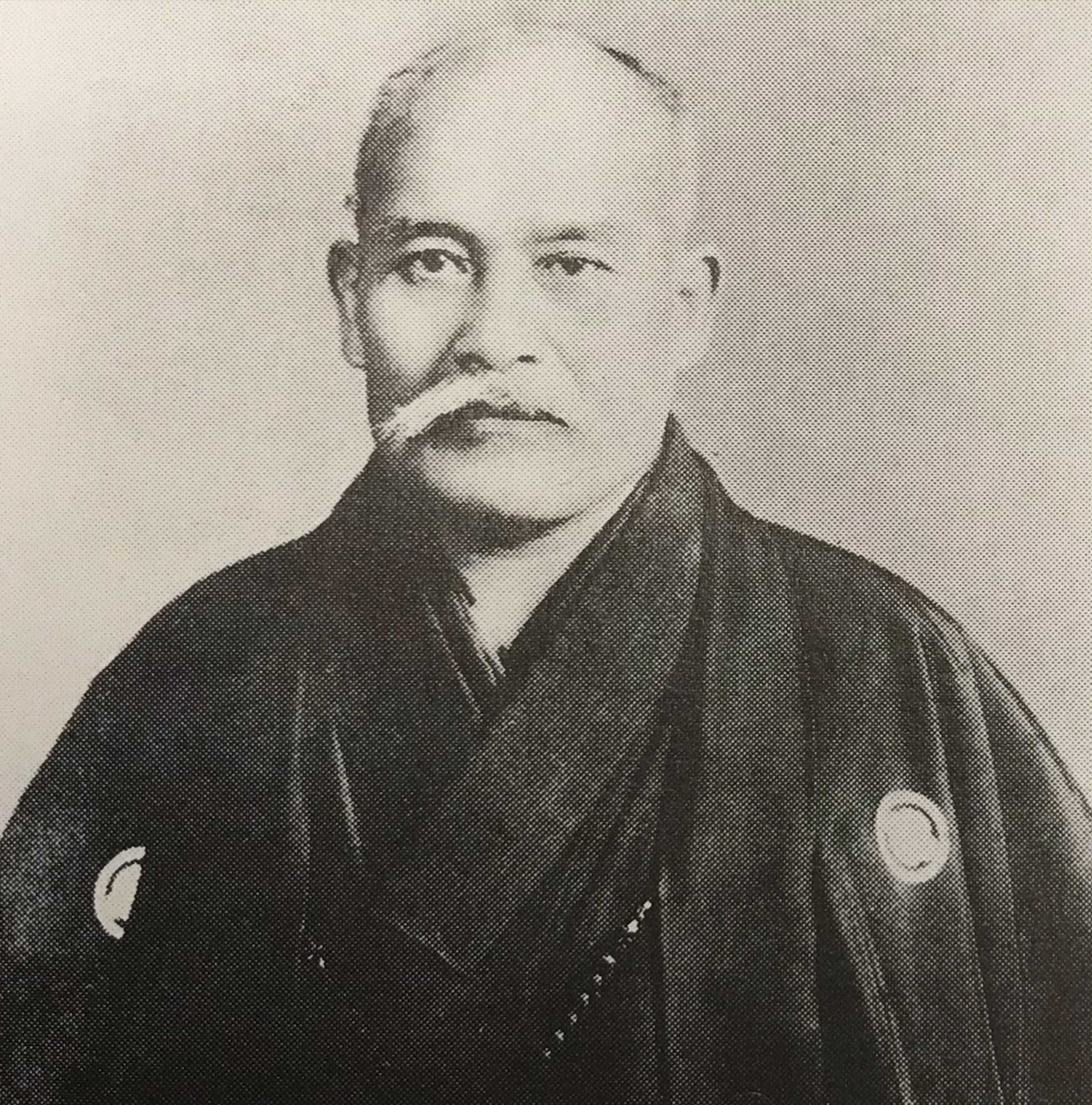
Ósensei ve věku 57 let, tedy krátce předtím, než začal učit na akademii vojenské policie. Převzato z knihy Aiki šinzui (Uešiba, 2002).
5. Zas tak silný nejsem
A: Vy jste měl co do činění i s námořnictvem, že?
Uešiba: S námořnictvem jsem spolupracoval dlouho. Od roku 1927 nebo 1928 jsem byl asi deset let vyučujícím na částečný úvazek na vysoké škole námořnictva [oficiální název Kaigun heigakkó, bývá překládáno jako Japonská císařská námořní akademie, nešlo o univerzitu].
B: Vyučující na vysoké škole námořnictva – to znamená, že jste učil vojáky?
Uešiba: Jistě, vojáky jsem učil hodně. V roce 1927 nebo 1928 jsem začal na té vysoké škole, a v roce 1932 nebo 1933 jsem byl zodpovědný za seminář budó na tojamské akademii a od roku 1941 nebo 1942 jsem na akademii vojenské policie vyučoval aiki. A na vysokou školu pozemních sil mě pozvali udělat ukázku, když tam byl ředitelem generál Tošinari Maeda, který později zemřel v boji na Borneu.7
B: Učit pro armádu musí být docela drsné, to určitě máte, co vyprávět, že?
Uešiba: Jednou mě dokonce obklíčili.
B: Taková drzost…
Uešiba: Ne, to ne. Bylo to jen takové porovnávání sil. Stalo se to, když jsem u vojenské policie začal učit aiki, a jednou večer jsem se procházel po cvičišti. Najednou jsem kolem sebe cítil něco divného. To musí něco být… pomyslel jsem si, a v tom se z různých křoví a dolíků vynořila spousta vojáků, obestoupili mě kolem dokola a začali na mě útočit dřevěnými meči a dřevěnými puškami [cvičnými puškami s bajonetem pro džúkendó]. Na takové věci já jsem ale zvyklý, bylo mi to úplně fuk. Jak se hrnuli, tak jsem jen lehounce měnil pozici těla, a oni když bodli, tak přepadli a svalili se na zem. Až byli všichni vyčerpaní.
Ale svět je stejně zvláštní. Jednoho z nich jsem zrovna nedávno potkal. Dělám poradce pro ken’júkai8 v prefektuře Wakajama.
Když jsem u nich byl, jeden muž mě poznal podle tváře, už z dálky se usmíval a šel ke mně. Během rozhovoru se ukázalo, že to byl jeden z té skupinky. Škrábal se na hlavě a povídal: „Velmi se omlouvám, za to co jsme tehdy provedli. Říkali jsme si, jestlipak ten nový učitel aiki je opravdu tak silný…, no a tak jsme vás v asi třiceti lidech obklíčili. Všichni jsme si dost věřili, ale ukázalo se, že ani takováhle parta proti vám neměla šanci. Byli jsme z toho úplně vedle.“
C: A co ta historka z tojamské akademie?
Uešiba: Porovnávání sil…? To bylo asi ještě před tím obklíčením u vojenské policie… Přišla za mnou skupinka kapitánů, co tam učili, a prý co, kdybychom zjistili, kdo je silnější. Ti vám byli tak namyšlení – samé „já jsem zvedl tohle“ a „já zlomil takhle silný kůl“. A pak, ať já předvedu, jakou mám sílu.
Řekl jsem „Já zas tak silný nejsem. Ale takové jako vy bych shodil i malíčkem. Dělám to nerad, ale pojďme tedy,“ a natáhl jsem pravou paži a dal ukazováček na kraj stolu. „Tak, vlezte mi na paži. Klidně se na ni položte břichem.“
Položili se na ni první, druhý, a když přišel třetí, všichni už kulili oči, ale nakonec se jich na sebe naskládalo šest. Jednomu, co stál vedle, jsem řekl „Přines mi vodu,“ a když mi nalil do skleničky a já se volnou levou rukou napil, tak oněmělí zírali jeden na druhého.
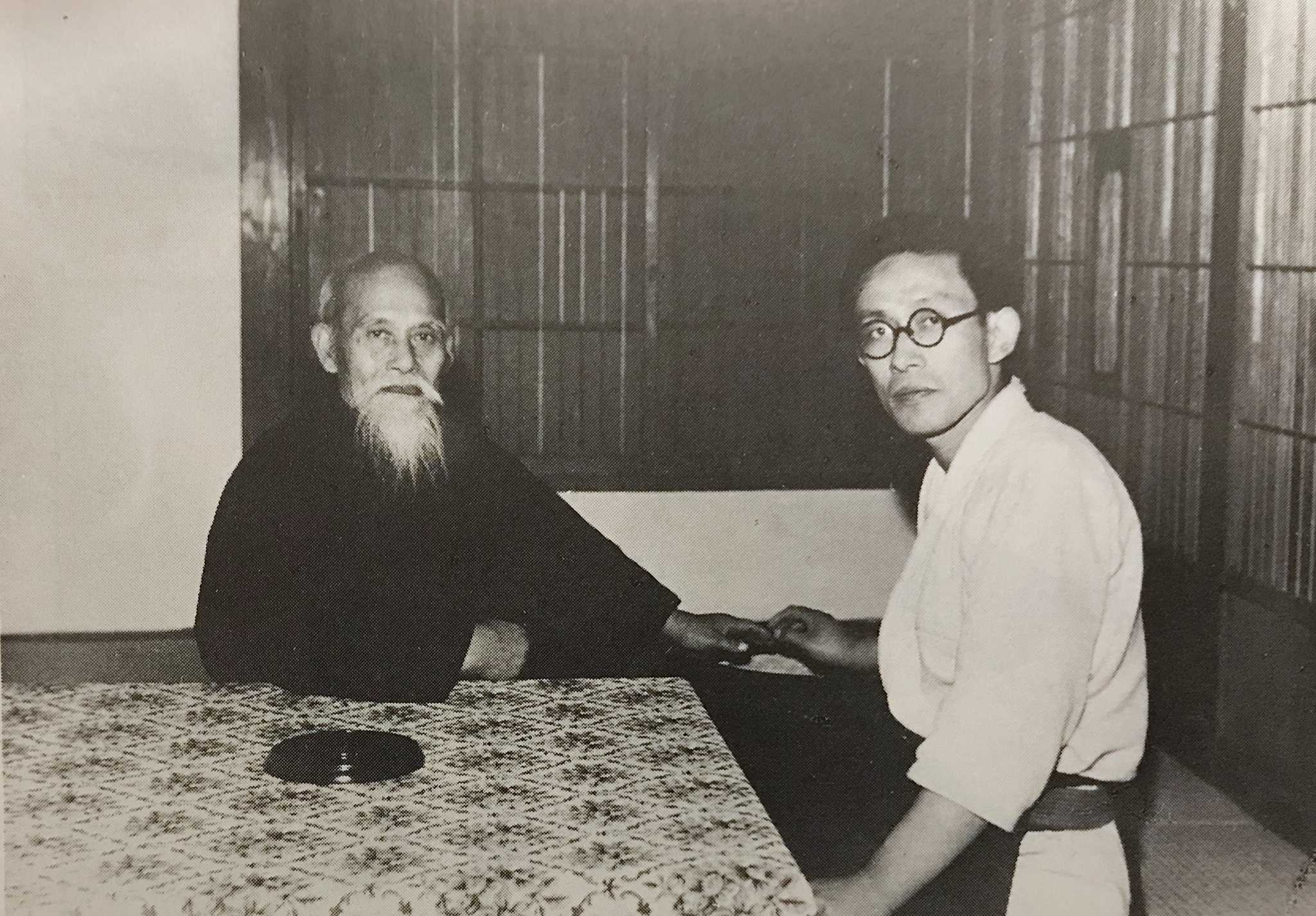
„Zakladatel a dóšu si povídají o minulosti a budoucnosti aikidó (ve věku kolem 72, resp. 34 let),“ převzato z knihy Aiki šinzui (Uešiba, 2002).
6. Síla a kruh
B: I když ale odhlédneme od aikida, tak máte docela velkou sílu, ne?
Uešiba: Moc velkou ne.
K. Uešiba: Sílu určitě má. Je ovšem nutno dodat, že to není jeho vlastní síla, ale síla energie aiki. Když se dříve účastnil osidlování9, stalo se, že asi sedm nebo osm dělníků nemohlo pořádně zvednout obrovský pařez. Otec je chvíli sledoval, pak jim řekl, ať uhnou, a šup, měl pařez na zádech a za chvíli už byl přenesený. Nepřipadá vůbec v úvahu, že by něco takového šlo zvládnout běžnou silou. Co se síly týče, je zajímavý i ten příběh s Mihamanadem.
B: Myslíte Mihamanadu z Takasogo beja [stáje (zápasníků sumó) Takasogo]?
Uešiba: Ano, toho. Pochází z Kišú [staré japonská provincie, z větší části odpovídající moderní prefektuře Wakajama]. V době, kdy jsem býval na předměstí Šingú ve Wakajamě, zápasil v sumó na vysoké úrovni a pak se vrátil domů. To byl taky obrovský silák. Ten dokonce unesl tři svázané kolejnice, které vážily každá přes tři metráky, takže celkem přes devět metráků. Když jsem se doslechl, že tenhle Mihamanada bydlí blízko, pozval jsem ho, ať přijde. Povídali jsme si o všem možném, a pak navrhl:
„Slyšel jsem, že i vy máte obrovskou sílu, nezasoutěžíme si trochu?“
„Tak to zkusme. Pokusím se tě znehybnit jedním ukazovákem,“ řekl jsem, a jak jsme seděli, tak jsem Mihamanadu nechal, ať na mě zatlačí. Chlap, co zvedne devět metráků na mě tlačil, až funěl, ale ani to se mnou nehlo. A jak napínal všechny síly, tak najednou vyletěl dopředu. Když jsem ho přitiskl na zem ukazovákem, nemohl se vůbec pohnout. Bylo to jako když dospělý přidržuje na zemi nemluvně. Navrhl jsem mu, že to zkusíme ještě jednou, a nechal jsem ho tentokrát ať mi zatlačí na hlavu. Ale samozřejmě jsem se zase ani nehnul. Tak jsem přehodil nohy dopředu, těžiště dal do boků a nechal na sebe tlačit se zvednutýma nohama, ale ani to mu nepohlo. Udělalo to na něj takový dojem, že začal studovat aikidó.
A: Když někoho znehybníte jen jedním prstem, tak to jistě musí být přes kjúšo [vitální bod], že?
Uešiba: Ve zkratce jde o to, že opíšu kruh se středem v tom člověku. Vnitřek toho kruhu je v dosahu síly toho člověka. Ať už je jakkoli silný, tak mimo kruh se jeho síla nedostane. Tam je bezmocný. Když tedy partnera dostaneme mimo ten kruh a přidržíme, tak ho můžeme držet ukazováčkem nebo klidně i malíčkem. Už v té chvíli je totiž bezmocný.
B: Jde tedy vlastně o mechaniku. I v džúdó, když chcete někoho hodit nebo znehybnit, hledáte takovouhle pozici. Jen pro to, abychom do té pozice partnera dovedli, potřebujeme různé manévry.
A: Vaše žena je z Wakajamy, že?
Uešiba: Ano. Ve Wakajamě měla příjmení Takeda.10
A: Když už mluvíme o příjmení Takeda, to je jméno rodu s hlubokým napojením na budó, že?
Uešiba: Dá se to tak říct. Lidé z mého rodu byli zase po generace císařští loajalisté.11 A to nebyla žádná malá věc. Prý tomu obětovali jmění a neustále proto někam jezdili.
B: Vy jste byl také odmlada neustále někde na cestách. Vaše žena to určitě neměla lehké, že?
Uešiba: Nebylo to tak pořád, ale byl jsem zaneprázdněný. Neměl jsem volný čas, který bych trávil doma.
K. Uešiba: Otcovi rodiče byli dobře zabezpečení, takže otec se mohl plně věnovat i šugjó [učení, asketické praxi] budó. A navíc, ohledně peněz si nikdy moc nedělal hlavu. Stalo se třeba tohle. … V Tokiu se usadil kolem roku 1926, bylo to asi podruhé, co tam byl. Nejdřív přišel on sám, rodina opustila Tanabe až roku 1927. Usadili jsme se v Saru mači v tokijské čtvrti Šiba širokane. Ten pronájem jsme získali díky synovi admirála Gonbeie Jamamota, Kijošimu. Na venkově jsme stále měli spoustu polí, lesů a dalších nemovitostí, ale měli jsme tak málo hotovosti, že jsme museli žít na dluh. I přesto otce ani nenapadlo, že by pozemky nebo pole prodal. A když studenti přicházeli s měsíčními nebo vstupními platbami, řekl jim „Nic takového nepotřebuju!“ a vrazil jim je zpátky se slovy „Darujte to božstvům“, v žádném případě si nebral peníze přímo. Když potřeboval peníze, tak si je bral z kamidany [domácího šintoistického oltáříku] a děkoval za ně bohům.12 Nikdy ho ani nenapadlo, že by mohl mít peníze z budó. Cvičili jsme tehdy v biliárovém sále rezidence prince Šimazu a přicházelo k nám cvičit mnoho důstojníků, například admirál Isamu Takešita, šlechticů, tehdejších vysokých úředníků. Tehdy jsme tomu říkali aiki džúdžucu, Uešiba rjú aikidžucu a podobně.
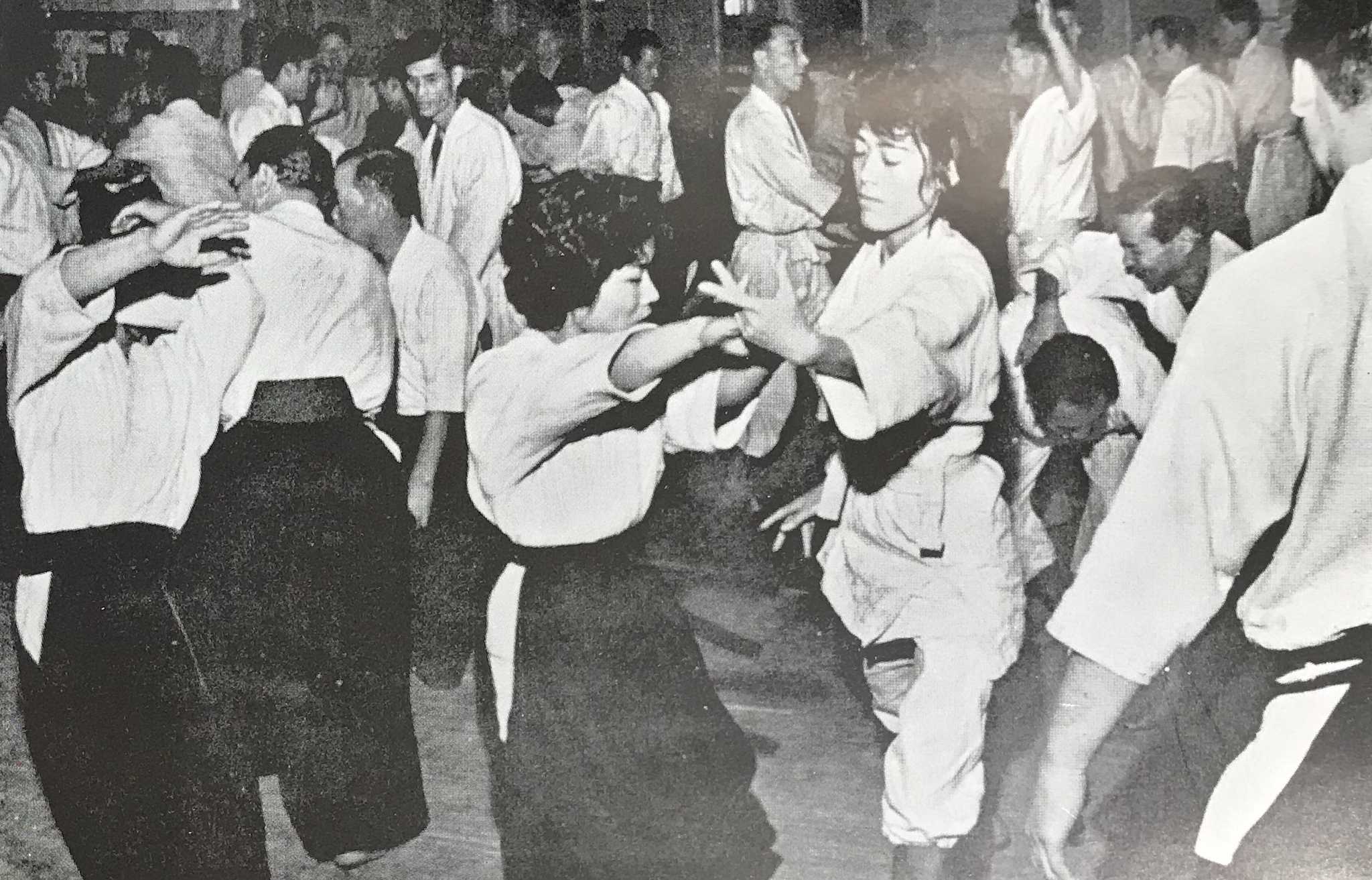
Keiko v Aikikai honbu dódžó, převzato z knihy Aikidó gihó (Uešiba, 1962, fotografie bez data, tedy nejpozději z roku 1962, kdy byla kniha poprvé vydána).
7. Jak se cvičí aikidó
B: V kolika letech je zhruba dobré se začít s praxí (šugjó) aikidó?
K. Uešiba: Od sedmi nebo osmi let už toho člověk zvládne dost, ale skutečné šugjó by mělo začít ideálně až tak od patnácti, šestnácti let. I po fyzické stránce je už v tom věku solidnější stavba těla a kosti už jsou trochu pevnější, navíc pro aikidó, a samozřejmě i pro jiná budó, je velmi důležitá psychická stránka. Ideální tedy je, když už člověk má základní vědomosti a nějak utvořený pohled na budó a svět vůbec.
B: Aikidó se liší například od džúdó tím, že je v něm velmi málo chytání a přetahování se s partnerem. Tím pádem nevyžaduje tolik síly. Navíc necílí na souboj jeden na jednoho, ale může pracovat s mnoha partnery. Jako budó je tedy úplně ideální, ale zároveň to znamená, že je to ideální nástroj pro rvačky. Nepřichází se k vám učit i různí špatní lidé?
K. Uešiba: Samozřejmě, hlásí se. Ale když někdo začne s myšlenkou, že by to pak použil ve rvačce, tak se možná přihlásí, ale později přestane chodit. Budó totiž nefunguje jako, když si jdete zatancovat nebo na film… Pokud nebudete cvičit neustále, i v dešti, i ve sněhu, denně – stejně jako chodíte každý den spát a vstáváte, tak se nebudete posouvat. Zvlášť aikidó je něco jako duchovní asketická praxe, takže kdyby ho někdo chtěl použít pro nějakou hloupou rvačku, tak si aikidó v prvé řadě nikdy neosvojí. A naopak kdyby si nějaký násilník osvojil aikidó, tak by ho ty násilné sklony opustily.
B: To tedy znamená, že když přijde nějaký špatný člověk, tak se neustálým zušlechťováním napraví.
Uešiba: Aikidó není „bu násilí“, je to „budó lásky“, není to tak, že já používám násilí na někoho, ale že násilného partnera přivedu do pokojného stavu. Už to pak nemůže být špatný člověk.
B: Není to tedy potlačení násilí násilím, ale přeměna násilí v lásku.
A: Když se k vám někdo přihlásí, tak se nejdřív učí základy, v případě džúdó by to bylo ukemi [přijetí technik, tedy především technika pádů]…
K. Uešiba: Nejdříve karada no sabaki [tj. taisabaki, pohyb tělem (ve vztahu k partnerovi, pro zachování dobré pozice)], a poté ki no nagare [proud ki].
A: Ki no nagare znamená…?
K. Uešiba: V aikidó neustále pomocí pohybu naší vlastní ki svobodně a spontánně13 řídíme partnerovu ki, cvičíme, jak partnera vtáhnout do našich pohybů. Potom přichází karada no tenkanhó (metoda otoček těla), což jak název napovídá, je nácvik otáčení těla. Nepohybujeme jen tělem, ale spolu s ním i s rukama a nohama. Jde tedy o to naučit se sjednotit celé tělo a pružně, měkce s ním pohybovat.
B: Při cvičení aiki [sic] je vidět, že padáte naprosto přirozeně, jako kdybyste se jen tak kutáleli, ale jak ukemi trénujete?
K. Uešiba: Ukemi v aikidó se nedělá v zápase, jako je tomu v džúdó, ale neustále si držíme odstup, a je pro nás tedy důležité svobodné, spontánní [viz pozn. 13] ukemi. Proto sebou nepráskáme jako v džúdó, ale spíše jako bychom se v ukemi kutáleli. Je to naprosto přirozené. Nejdříve tedy důkladně cvičíme tyto čtyři věci.
B: To znamená, že teprve potom, co důkladně natrénujete ty čtyři věci, tedy karada no sabaki, ki no nagare, karada no tenkanhó a ukemi, tak začnete s technikami. V technikách začínáte čím?
K. Uešiba: Technikou šihó nage, což je způsob, jak partnera přeseknout ve všech směrech.14 Funguje to stejným způsobem, jako se používá meč. Samozřejmě používáme i bokken [dřevěný meč], ale jak už jsem říkal dříve, i protivníka sjednocujeme se sebou a dokážeme s ním svobodně [viz pozn. 13] pohybovat. Proto držíme-li třeba bó [tyč] nebo bokutó [dřevěný meč], trénujeme, aby ty zbraně byly celé jako živé a abychom je mohli používat stejně jako vlastní ruce a nohy. Proto, držíme-li v aikidó nějakou věc, tak okamžitě přestává být prostou „věcí“ a stává se z ní prodloužení našeho těla… Potom následuje irimi nage. Partner se nás snaží zasáhnout, a my do toho vstoupíme, takže nás mine.
Během toho mohou proběhnout i dvě nebo tři atari. Například tady ze strany přichází partnerova pěst nebo malíková hrana15. Takhle udeřím pravou malíkovou hranou, využiji celou partnerovu sílu, a jak otevírám tělo doleva dozadu, oběma rukama vedu partnerovu pravou ruku ve směru jeho síly, pak tu ruku uchopím a tím, že se úplně přirozeně otočím, partnerova pravá ruka se stočí dozadu a on spadne… To je také ki no nagare. Partner útočí pravou rukou. Když tuto ruku vedeme směrem, kterým proudí ki… je na to mnoho složitých teorií, ale spíš než, že by partner byl ve stavu úplné bezmoci, tak se dá říct, že partnerova síla pokračuje směrem, kam ji chceme dovést. Proto tedy platí, že čím silnější je partner, tím snazší to mám já.16 Pokud bychom partnerově síle čelili přímo, tak bychom se silnějšímu člověku nikdy nemohli vyrovnat.
Uešiba: Navíc v aikidó v žádném případě nejdeme proti partnerovi. I když nás přichází udeřit nebo seknout, je to přece jen jedna linie nebo jen jeden bod, takže jen stačí se tomu vyhnout…
K. Uešiba: A poté následuje suwari waza daiikkjó, cvičení men, od dainikjó už jsou techniky pák a znehybnění a tak dále.17
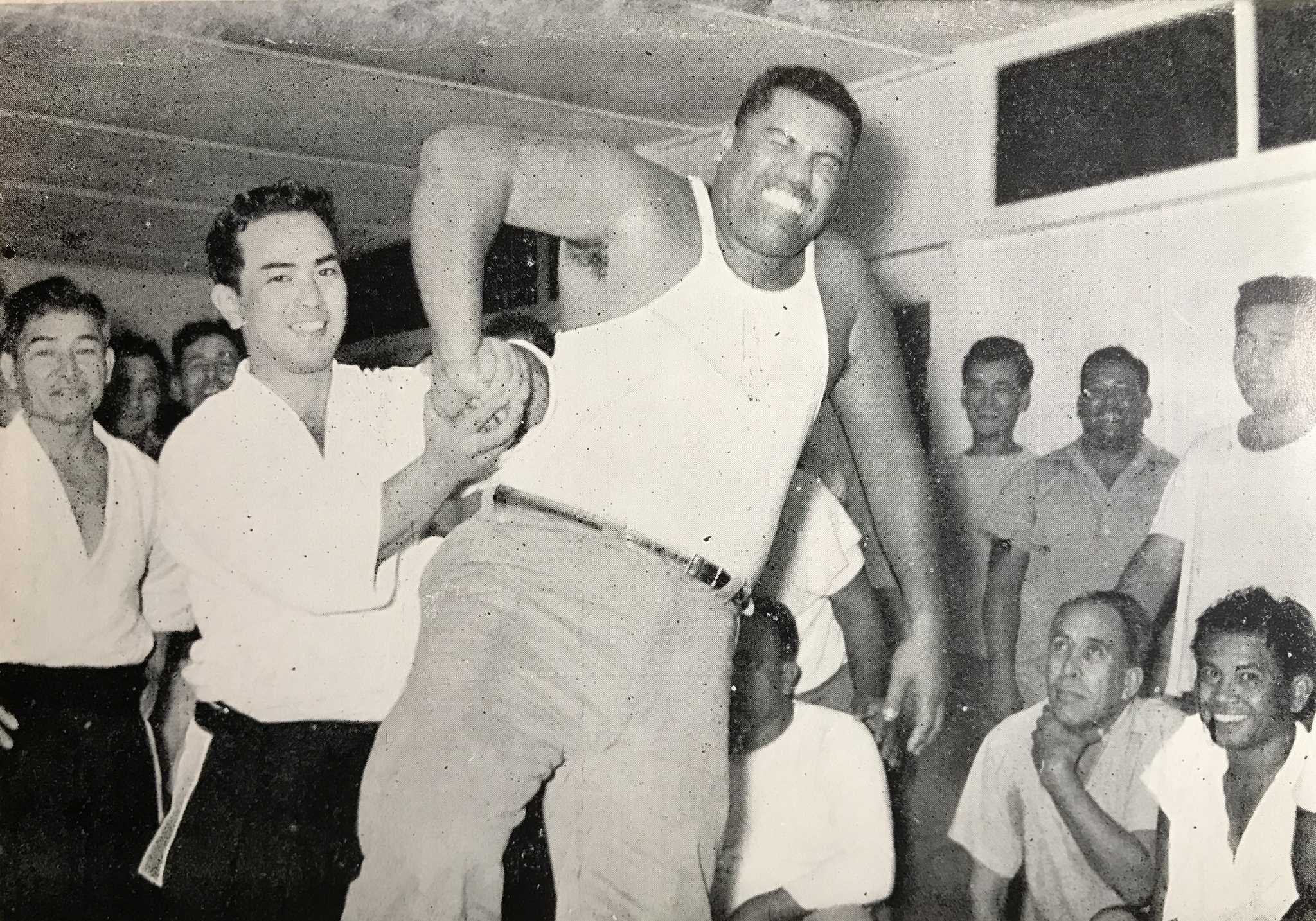
„Vedoucí oddělení šihanů“ Kóiči Tóhei při cvičení „v havajském policejním dódžó v září 1953,“ převzato z knihy Aikidó (Uešiba, 1964), odkud je přeložen i tento rozhovor.
8. Cesta aiki je nekonečná
B: Velice důležitá je tedy psychická stránka [reakce na to, co říkal Kiššómaru dříve, viz 7. část], ale jak dlouho to může trvat od doby, kdy se začneme učit, dokud nejsme zcela spokojení?
K. Uešiba: Někdo je šikovný a někdo ne, takže se nedá zevšeobecňovat, ale když budete cvičit kolem tří měsíců, tak si možná pomyslíte „Aha!“. A také platí, že když budete cvičit tři měsíce, tak vydržíte i půl roku, a když vydržíte půl roku, tak můžete pokračovat jakkoli dlouho. Netrpěliví lidé přestanou během těch tří měsíců.
B: Tento měsíc osmadvacátého se budou udělovat technické stupně dan, kolik držitelů danu už máte?
K. Uešiba: Nejvyšší dan je osmý, osmý dan mají čtyři lidé, sedmý šest lidí, a v případě prvního danu by to bylo velmi mnoho. To jsou samozřejmě jen lidé, co byli po válce v kontaktu s honbu [„vedení“, „ústředí“, zde myšlena centrála organizace Aikikai].
B: Jak se rozhoduje o stupních dan?
K. Uešiba: Dany se udělují na doporučení vedoucích jednotlivých dódžó, a dóšu (z rodiny Uešibů) je schvaluje. A udělují se v případě, že člověk v tréninku prokáže, že má dostatečné schopnosti.
B: Prý i v zahraničí se hodně lidí učí aikidó.
K. Uešiba: Do USA na Havaj byl vyslán Tóhei, 8. dan, a vyučuje tam. V Barmě je vyučujícím na policejní škole šihan Aritoši Murašige.18
Nejvíce se nám daří na Havaji, kde pravidelně cvičí asi tisíc dvě stě nebo tři sta lidí. Kdybychom ten počet lidí na Havaji srovnali s Tokiem, odpovídalo by to asi sedmdesáti nebo osmdesáti tisícům.
Ve Francii je padesát čtyři držitelů danu, a teď je v honbu dódžó [hlavním, ústředním dódžó] jako uči deši [žák, který žije v dódžó] André Nocquet, který má první dan, v džúdó má ale třetí dan a vyučuje ho ve Francii. Pan Nocquet se prý začal učit aikidó potom, co se zranil při cvičení džúdó. Říká, že začal s aikidó, ale nedařilo se mu proniknout do jeho ducha to tak, jak si představoval. Dospěl tedy k tomu, že jediná cesta, jak pochopit pravého ducha aikidó, je jít do místa jeho vzniku, a proto přicestoval do Japonska. Panamský velvyslanec, pan Martienis se také účastní tréninků, ale japonské klima je pro něj studené, takže v zimě odpočívá. A pak je tu slečna jménem Haru Onoda, která studuje v Římě sochařství. Začala docházet do dódžó, když byla studentkou Umělecké akademie19, a teď nedávno mi od ní přišel dopis, kde píše, že se setkala s Italem, který dělá aikidó a velmi vřele ji přijal.20
A: Povíte nám něco k interpretaci technik?
Uešiba: Dá se to shrnout slovy „masakacu“, „agacu“ a „kacuhajai“ [sic]21. Jak jsem již dříve říkal, masakacu znamená zvítězit správně. Agacu znamená zvítězit v nám daném nebeském údělu. Kacuhajai znamená odhodlání zvítězit rychle.
A: Zdá se, že je to dlouhá cesta.
Uešiba: Cesta aiki je nekonečná. Je mi už sedmdesát šest roků22 a stále se věnuji šugjó [učení, asketické praxi]. Ať už jde o cestu boje nebo cestu umění, dosáhnout v ní mistrovství není snadný úkol, ale v případě aikidó je třeba obsáhnout i přírodní jevy na nebesích a na zemi, třeba i takové jako otáčení Země, je třeba pochopit nesmírně velký systém…je to šugjó na celý život.
B: Aikidó je tedy zároveň cesta bu [boje] a zároveň učení kami [bohů], že? Duch aikidó je tedy…
Uešiba: Aikidó, to je ai [láska]23, musíte chovat v srdci velkou lásku nebes a země a laskavou ochranu všech věcí přijmout za svůj úděl. Naplnit tento úděl je bezpochyby pravá cesta bu. Pravé bu je zvítězit nad sebou samým a zbavit protivníka bojovného ducha… Ne, je to cesta k absolutnímu sebezdokonalení, kterou se zbavíme protivníka jako takového. Bojová technika aiki, to je také práce a dlouhá cesta, kterou si osvojujeme zákony nebes, až dosáhneme nejvyššího stavu jednoty ducha a těla.
B: Aiki je tedy cesta ke světovému míru, že?
Uešiba: Nejzazším cílem je přímo nastolení pozemského ráje. Celý svět musí každopádně dosáhnout harmonie. Pak nebude třeba jaderných ani vodíkových bomb, takový svět bude radostný a příjemný k žití.
Reference
Kiššómaru Uešiba. Aikidó gihó. Kówadó, Tokio, 1962. Supervize Morihei Uešiba. Dotisk Aikidó gihó fukkokuban, Šuppangeidžucuša, Tokio, 2007.
Kiššómaru Uešiba. Aikidó. Kówadó, Tokio, 9. vydání, 1964. Supervize Morihei Uešiba. Poprvé vydáno 1957.
Kiššómaru Uešiba, editor. Aiki šinzui – aikidó kaiso, Uešiba Morihei goroku. Hačiman šoten, Tokio, 2002. 4. tisk, 2014.
-
Japonská slova džijú a džizai (zde jen džizai), která postupně splynula se západními pojmy (osobní) svobody a libovůle, původně konotovala naopak termíny zenového buddhismu, které se vztahovaly oproštění od chtění. Mohli bychom tedy překládat moderně, západně „pohybuje se, jak se nám zamane“, a nebo blíže zenovému duchu „pohybuje se zcela spontánně“. Z hlediska zenu a aikidó by v tom ale neměl být žádný rozdíl, zkrátka, jak je libo. ↩
-
První dvě studoval také Džigoró Kanó, zakladatel džúdó, jagjú rjú a (jagjú) šinkage rjú jsou školy kendžucu, boje s mečem. ↩
-
Na konci období Taišó bylo Ósenseiovi podle našeho počítání 43 let. ↩
-
Při rozhovoru Ósensei zřejmě reportérům předváděl dvě odlišná kamae. ↩
-
Na tuto cestu šli zřejmě na pozvání paramilitantní ultranacionalistické skupiny. Po zatčení čínskými orgány a navrácení do Japonska byl Deguči uvězněn. (Wikipedia – Morihei Ueshiba, část Ayabe, 1920–1927) ↩
-
Šinbuden bylo zařízení sloužící pro propagaci a výuku japonských bojových umění. Univerzita Kenkoku v Mandžusku fungovala v letech 1938–45 a stejně jako Šinbuden byla nástrojem japonské propagandy na okupovaném území. Toto Ósenseiovo angažmá už bylo na rozdíl od předchozího oficiální. V Japonsku nevzniklo žádné jasné stigma spojené s válečným režimem, tím méně s mocenským rozpínáním Japonska po východní Asii. ↩
-
Ósensei používá zkrácené nebo jinak nepřesné názvy škol. Oficiální japonské názvy jsou Tojama rikugun gakkó, Rikugun kenpei gakkó, Rikugun daigakkó. Všechny tři jsou tedy v zásadě vázané k pozemním silám armády (rikugun), nikoli námořnictvu (kaigun). Zvláštní postavení má ale akademie vojenské policie. Tzv. vojenská policie (někdy se překládá i jako četnictvo), kenpeitai, je známá hlavně pro svou funkci rozvědky a kontrarozvědky. Byla instrumentální pro japonské mocenské rozpínání ve východní Asii, jak před válkou, tak během ní, i pro politickou represi na území Japonska, což s sebou ale v Japonsku po válce neneslo takové stigma, které po změně režimu přišlo v případě evropských totalit. ↩
-
Ken’júkai znamená „spolek přátel kenu“, přičemž ken je zde napsáno znakem vyskytujícím se ve slově pro výše zmíněnou vojenskou policii. Jako zkratka vojenské policie, případně akademie vojenské policie, je samotný znak ken poměrně nepravděpodobný, je tedy možné, že jde o chybný znak v přepisu rozhovoru, a šlo ve skutečnosti o „spolek přátel meče“ (také ken), jakých je po celém Japonsku mnoho. Ostatně pokud by šlo o spolek absolventů akademie, nebylo by setkání bývalého vyučujícího s bývalým studentem zas tak zvláštní. ↩
-
Osidlování Hokkaidó se Ósensei účastnil ve věku kolem 30 let, viz 3. část, tedy před narozením Kiššómarua Uešiby v roce 1921. ↩
-
Běžně se u Ósenseiovy ženy Hacu uvádí jako příjmení za svobodna Itokawa/Itogawa. Tak či tak je třeba vzít v úvahu, že zákony týkající se moderních japonských příjmení vcházely v platnost až v dětství Hacu a Moriheie. Většina rodin do té doby neměla, alespoň oficiálně, jméno a nějaké si tedy musela zvolit: někdy to dosavadní neoficiální, někdy jméno místní vlivné rodiny, apod. Itokawa bylo shodou okolností jméno takového rodu, ze kterého pocházela také Ósenseiova matka. Takeda bylo sice mimo jiné jméno samurajského rodu, zakladatele daitó rjú džúdžucu Sókakua Takedy (od kterého se Ósensei učil, viz 3. část), ale také je to dnes jedno z nejběžnějších japonských příjmení. ↩
-
Slovo kinnó, loajalita k císaři, se zpravidla vztahuje ke konci období Edo (šógunátu Tokugawa), kdy fakticky znamenalo kombinaci patriotismu a odporu vůči šógunátu. I když to není jasně vymezený pojem, jde v každém případě o politický názor, nikoli o nějaký zvláštní vztah k císaři. Po pádu šógunátu a restauraci Meidži (šlo o restauraci císařství) už loajalismus neměl význam, proto Ósensei narozený v roce 16 období Meidži, o této angažovanosti svého rodu ví už jen z doslechu. ↩
-
Tradiční forma placení v dódžó běžná i dnes je kombinace vstupního poplatku a následních měsíčních plateb gešša v hotovosti. Systém, který používal Ósensei, je běžný v buddhistických chrámech, které v Japonsku fakticky hospodaří, ale za jejich služby se často platí odložením daru na oltář. Mezi učitelem a žákem jsou pak běžné dárky a pozornosti proudící oběma směry. Učitel tak může svým darem poplatek převýšit nebo poplatky po čase studentovi vrátit. Důležitý je vztah, poplatky jsou spíše jedním z rituálů, kterým se udržuje. (Osobní zkušenost a komunikace.) ↩
-
Džijú džizai znamená naprostou svobodu – ovšem s konotací osvobozené mysli v buddhistickém slova smyslu, tj. osvobozené i od touhy ovládat partnera, viz též pozn. 1. ↩
-
Šihó nage znamená v doslovném překladu „čtyřsměrový hod“. Šihó ale může znamenat jak „čtyři směry“ (světové strany, vpřed a vzad, vlevo a vpravo, apod.) tak „všechny směry, všude“, v druhé části věty Kiššómaru vlastně interpretuje název techniky tak, že šihó znamená všechny směry a ty se nevztahují k samotnému hodu, kterým je technika zakončena, ale k přesekávání partnera v průběhu techniky. ↩
-
Šutó nebo tegatana je ruka se zpevněnou malíkovou hranou, která se používá podobně jako meč. Tegatana je spíše hovorové slovo, šutó je terminus technicus v budó, píší se stejně. Z následujícího popisu je zřejmé, že jde o sek/úder jokomen uči pravou rukou, tedy na náš levý jokomen. ↩
-
Suwari waza: „technika v sedě“ (tj. v kleče), (dai)ikkjó, resp. (dai)nikjó: „(co se učí jako) číslo 1, resp. 2“ (dai je prefix řadové číslovky, zdůrazňuje tedy, že číslovky v názvu označují pořadí, běžně se vypouští). Cvičení men by mohlo být cvičení založené na útoku men uči, např. men uči ikkjó undó, popisované mezi základními cvičeními v příručce Aikidó gihó (Uešiba, 1962), jejíž první vydání je z podobné doby jako rozhovor. Je také možné, že jde o slovo omote, které je možné zapsat stejným znakem jako men, a jde tedy jen o vysvětlivku k technice ikkjó. V tomto významu by to bylo méně obvyklé, ale to redaktoři nemuseli brát v potaz. ↩
-
Kóiči Tóhei byl jedním z nejvýznamnějších učitelů aikidó, Ósensei mu později udělil desátý dan. Působil jako učitel v Japonsku, pak především na Havaji a jinde v USA a také v Evropě. Po smrti Ósenseie postupně vzrůstalo napětí mezi honbu dódžó, resp. Aikikai pod vedením druhého dóšu Kiššómarua Uešiby, a Tóheiem, které vyvrcholilo Tóheiovým odchodem a založením vlastní organizace a stylu (Ki no kenkjúkai, Šinšin tóicu aikidó).
Aritoši Murašige působil v Barmě v letech 1953–1955, v roce 1958 ho nahradil Seigo Jamaguči. Pokud tedy Kiššómaru Uešiba mluvil o stavu v době rozhovoru, tak se rozhovor zřejmě odehrál v roce 1955. (Tehdy André Nocquet, viz dále, přijel do Japonska, v roce 1957 ho opustil.) Je také možné, že rozhovor proběhl později, když do Barmy zřejmě dočasně žádný učitel vyslaný nebyl, ovšem do roku 1957, kdy byl ještě Nocquet uči deši.
Z našeho pohledu se může jevit poněkud ironické, že do Barmy byl v rámci poválečné pomoci, vyslán Murašige, který dříve učil aikidó v okupovaném Mandžusku a údajně tamtéž aktivně působil i v japonské armádě. ↩
-
„Bikó“, celým názvem Tókjó bidžucu gakkó, Tokijská akademie výtvarných umění, později začleněna do dnešní Tókjó geidžucu daigaku, Tokijské univerzity umění. ↩
-
André Nocquet byl nestorem francouzského a vlastně vůbec evropského aikidó. Haru Onoda velmi pomohla rozvoji aikidó v Itálii. Japonský přepis (Maručienisu) jména panamského diplomata by mohl odpovídat výslovnosti Martienis (možná také zkomolenému Martinez – Maručinesu). Na rozdíl od zbylých dvou zřejmě nešlo o žádnou významnou osobnost světového aikidó. ↩
-
Poslední z trojice, obvykle kacuhajahi, je zde uvedeno jako kacuhajai. Nejde jen o jinou výslovnost: ve variantě kacuhajai je vynechán poslední znak (hi, slunce) a místo něj je ve fonetické podobě doplněna podobně znějící koncovka adjektiva i. Je možné, že jde o omyl vzniklý při zápisu rozhovoru. ↩
-
Ósenseiovi, narozenému 14. prosince 1883 bylo podle tradičního japonského počítání věku 76 let po dobu kalendářního roku 1958, podle našeho počítání mu až do 14. prosince 1958, bylo 74 let. Kniha obsahující rozhovor poprvé vyšla v roce 1957, tento překlad vychází z vydání z roku 1964 (Uešiba, 1964) a je možné, že rozhovor byl do knihy spolu s dalšími nečíslovanými kapitolami na konec knihy v průběhu let bez dalšího vysvětlení prostě přidán. Ze zmínek o Murašigem a Nocquetovi by se dalo usuzovat, že rozhovor proběhl v letech 1955–1957 (viz pozn. 18). Jako nejpravděpodobnější interpretace se mi tedy jeví, že rozhovor proběhl roku 1957 a Ósensei si tedy dle japonského počítání přidal rok, dle našeho tři roky, bylo mu tedy ve skutečnosti „jen“ 73 let. ↩
-
Homofonie s první slabikou aikidó je z jazykového hlediska čistě náhodná. Ósensei často mluví o dvojici bu (boj, válečnictví), ai (láska). ↩